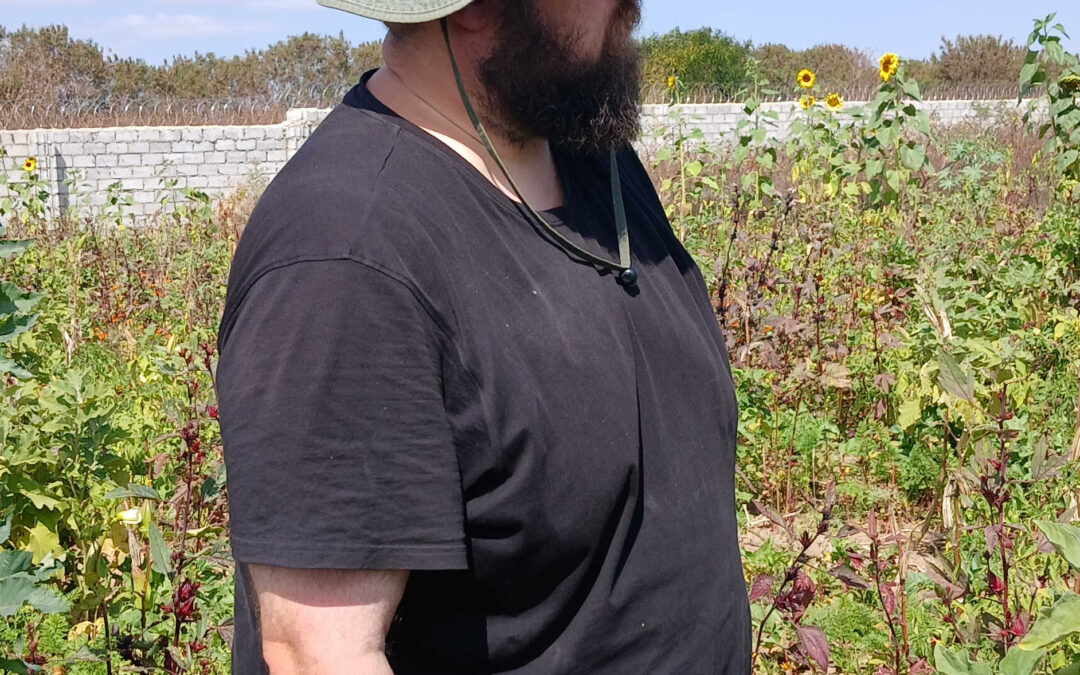
Interview with Jyrki Hilli: Finnish Natural Sciences Student Reflects on his Internship in Zambia
Jyrki Hilli, a Bachelor’s student in Natural Sciences at Savonia University of Applied Sciences in Finland, recently completed a five-week internship at Kasisi Agricultural Training Centre (KATC) in Zambia. His placement is part of an Erasmus+ international exchange, with his internship officially hosted by the University of Zambia (UNZA), which coordinates various field sites across the country.
Jyrki shared that although his previous experience was in construction and mining, he’s always been drawn to food production and agroecology. When the opportunity for international internships arose, he made a commitment to seize it. “I knew very little about Zambia other than it’s in Africa,” he admitted, “but when I heard about the country’s focus on organic agriculture, I became very interested.”
During his stay at Kasisi, Jyrki rotated through various departments including the demo garden, rain-fed and irrigated crop production, livestock, and small-scale processing of dairy and oats. Reflecting on his time, he highlighted one of the key principles of organic farming that made a strong impression on him: minimizing external inputs and maximizing internal resources.
“I learned a lot about the idea of zero waste—using what you already have in your system to maintain fertility and control pests,” he explained. “It’s about designing systems that are robust and simple, often relying on indigenous species. This makes them more resilient to climate and economic shocks.”
He was particularly excited about seeing organic concepts in action, rather than just reading about them. “There were things I had heard of before, but I had never seen them implemented. It’s amazing how a theory you learned years ago clicks into place when you see it in practice.”
When asked what excited him most about Zambia, Jyrki didn’t hesitate to mention the people. “Everyone has been so welcoming, helpful, and easy to communicate with. Even when my questions weren’t the most informed, people patiently guided me.”
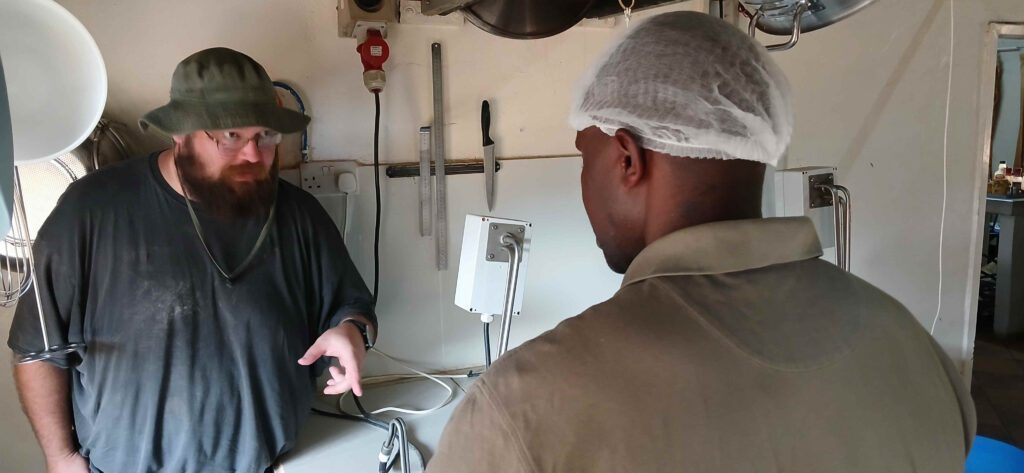
Looking ahead, Jyrki is eager to bring some of these experiences back to Finland. “There are many things I’d like to try—like soil amendments and organic fertilizers from the demo garden, and biostimulant interplanting techniques from the ATM system I saw with Irfan, Siva, and Ravi.”
One practice that especially intrigued him was the use of nitrogen-fixing trees in agroforestry. “We have one species in Finland that does this. I’d love to experiment with it in our context.”
Despite the limitations of the dry season, which meant lower activity in crop and milk production, Jyrki felt his internship was rich in learning. “I wish I could have done even more. But what I’ve learned here—from staff, farmers, and observing systems—has been incredibly valuable.”
As his internship in Zambia draws to a close, Jyrki leaves with a deeper appreciation for agroecology, a broadened perspective on sustainable farming systems, and a strong desire to integrate these ideas into his future career.
Recent Comments